Sperm
Sperm cells are formed in the seminiferous tubules of the testes through a process known as spermatogenesis,
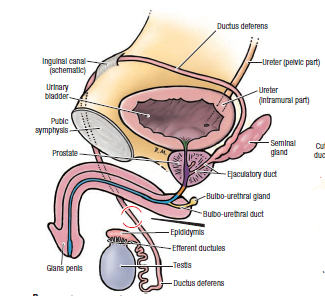
Sperm produced travels inside the ductus deferens which ends in prosthetic urethra.

Journey of the Sperm
Within one hour of insemination, sperm in the vagina enter the cervix, get into the uterine cavity, into the fallopian tube where they get capacitated and remain capable of fertilization for 48 hours.
Of the hundreds of millions of sperm released during ejaculation, only about 200 reach the site of fertilization in the oviduct.
Sperm transport results from the sperm's swimming motion and is assisted by contractions of the uterus and fallopian tubes (augmented during female orgasm, if it occurs).
During their journey, sperm undergo a crucial process called capacitation, which takes about 5-6 hours in humans.
Capacitation occurs by removal and/or alteration of the glycoproteins on the sperm plasma membrane.
This process depletes cholesterol molecules in the membrane, helping facilitate the release of enzymes needed to penetrate the egg's exterior
The ion channels in the sperm are modified, leading to changes in membrane potential and increased motility (hyperactivation).
Sperm hypermotility facilitates sperm passage through the cumulus matrix.
Noncapacitated sperm fail to penetrate the cumulus matrix.
Capacitation prepares the sperm for the acrosome reaction and allows it to recognize and bind to the zona pellucida (the egg's outer layer).
The acrosome reaction involves the release of hydrolytic enzymes from the acrosome, a cap-like structure covering the anterior part of the sperm head.
The outer acrosomal membrane fuses with the sperm’s plasma membrane, leading to exocytosis of enzymes such as acrosin and hyaluronidase.
These enzymes help the sperm penetrate the zona pellucida, the glycoprotein layer surrounding the oocyte (egg).
The released enzymes digest the zona pellucida, allowing the sperm to reach the oocyte.
The sperm binds to specific receptors on the zona pellucida, primarily ZP3 glycoproteins.
++++++++++++++
Reference
1. http://gizmodo.com/what-happens-to-sperm-once-theyre-inside-a-woman-1716992251